Skip to product information
1 of 3

Vitality Now Products

Organic Licorice Root – Ayurvedic Adaptogen for Gut Health, Natural Energy & Skin Radiance

Organic Licorice Root – Ayurvedic Adaptogen for Gut Health, Natural Energy & Skin Radiance

Regular price $30.00
Regular price Sale price $30.00
Sale Sold out
Size

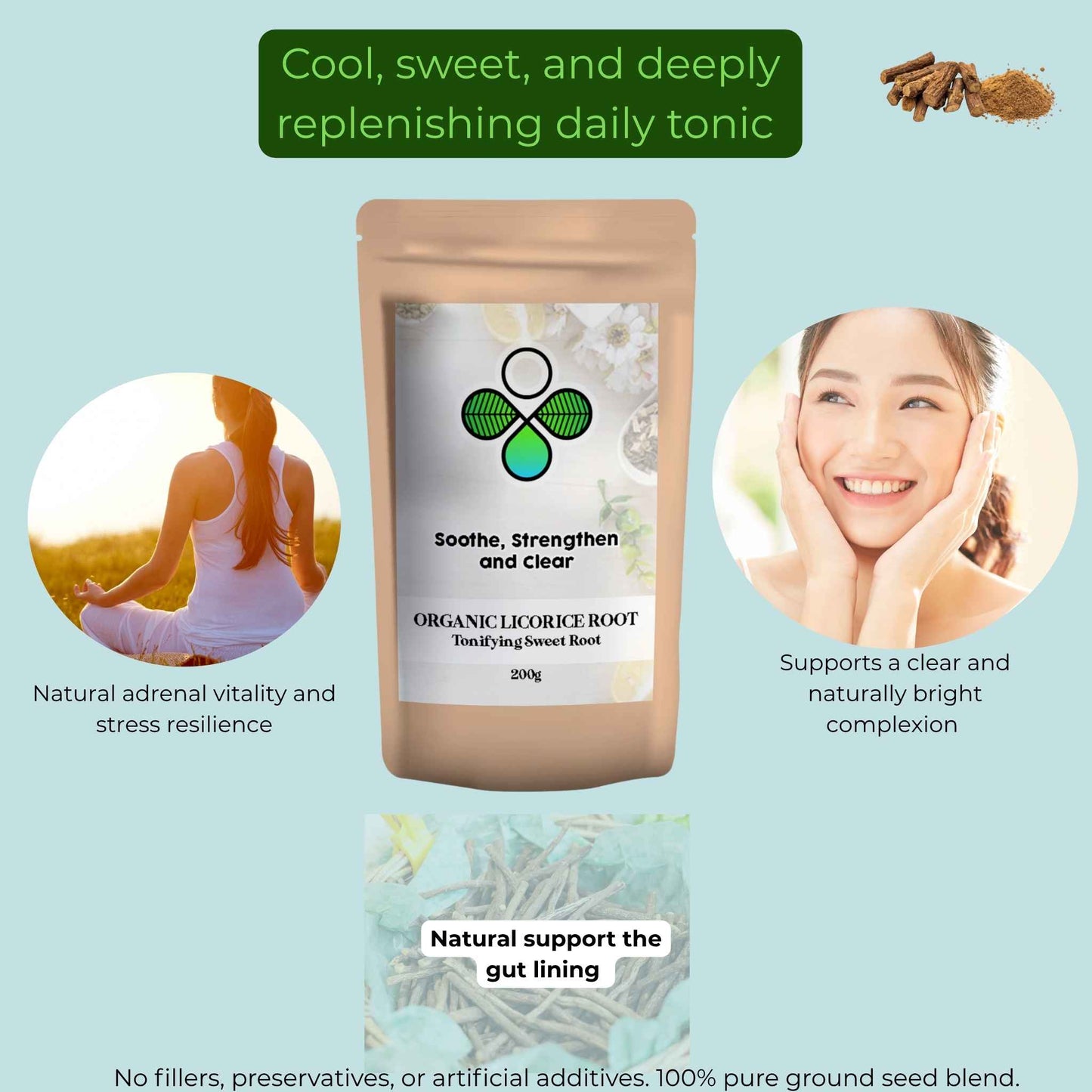
Naturally sweet root known as Yastimadhu, prized in Ayurveda for centuries as a gentle harmonising ingredient in teas and herbal blends. Simmered into a soothing tea, stirred into warm milk, or added by the pinch to balance a formula. Certified organic, needs no added sweetener.

View full details

About This Herb

Known in Sanskrit as Yastimadhu ("sweet stick"), Licorice Root (Glycyrrhiza glabra) is one of the most widely used herbs across Ayurveda, Traditional Chinese Medicine, and Western herbal tradition. Classified in Ayurveda as a Rasayana (rejuvenating tonic), Licorice Root is traditionally considered tridoshic, traditionally described as balancing Vata through its sweet, heavy, unctuous qualities, pacifying Pitta through its cooling nature, and traditionally associated with a special clearing action (prabhava) on Kapha.

Licorice Root is also traditionally classified in Ayurveda as a harmonising herb, widely included in classical formulations in small amounts to balance the sharper qualities of other herbs in a blend.

This is also one of the most widely used herbs across Vitality Now's own range: Licorice appears in three of Kimmana Nichol's signature formulas, the Apana Prana digestive blend, the Sandalwood Saffron Blue Lotus Herbal tea, and the Clarifying Herbal Clay Mask, where its traditional harmonising quality helps balance the other herbs in each formula. 

Licorice is also part of Kimmana Nichol's 16-herb blend Ojas Nectar which aids in digestion, assimilation, and tissue transformation.

Traditional Ayurvedic wellness product. Terms such as "Rasayana," "Medhya," and dosha/dhatu classifications describe traditional Ayurvedic concepts and are not claims of medical or physiological effect on any organ, system, or hormone. This information is not medical advice and has not been evaluated by the TGA. Not intended to diagnose, treat, cure, or prevent any disease.

Benefits

• Traditionally classified in Ayurveda as a Rasayana (rejuvenating tonic) and one of the few truly tridoshic herbs

• Traditionally used as a harmonising herb in Ayurvedic formulations, traditionally valued for balancing and smoothing the combined action of other herbs

• Traditionally classified as sweet, cooling, and Pitta-pacifying

• Traditionally enjoyed as a naturally sweet daily tea or tonic, requiring no added sweetener, Licorice is naturally many times sweeter than sugar

• Naturally rich in flavonoid and polysaccharide compounds

Directions for Use

Standard preparation: 0.5–3 grams (approximately ¼ to ½ teaspoon) with warm water, once or twice daily, or as directed by your Ayurvedic practitioner.

With warm water: Stir 0.5–3 grams into a glass of warm water and drink.

With warm milk (traditional): Simmer ½–1 teaspoon in warm dairy or plant-based milk, a traditional Ayurvedic preparation, sweetened naturally with honey if desired.

With honey: Mix with a small amount of raw honey for a traditional preparation.

As a herbal tea: Simmer ½ teaspoon in 2 cups of water for 10 minutes, strain, and sip warm.

As a harmonising herb in formulas: Traditionally added to Ayurvedic herbal blends in small amounts (¼ teaspoon) to balance the combined action of other herbs.

Timing: Traditionally taken before or after meals, or before bed in warm milk as part of an evening routine.

Safety note: Licorice root isn't recommended for long-term daily use in larger amounts without guidance from an Ayurvedic practitioner. If you're pregnant, breastfeeding, managing your blood pressure, potassium levels, or your heart or kidneys, or taking anything prescribed, particularly corticosteroids, diuretics, or blood pressure medication, it's best to check with your doctor first.

Key Botanicals

• Licorice Root powder (Glycyrrhiza glabra), certified organic, whole root, ground

No fillers, binders, preservatives, or additives. 100% pure organic Licorice Root powder.

  • benefits of naturally occuring compounds in licorice

Frequently Asked Questions

What is Licorice Root used for in Ayurveda? +

Licorice Root (Glycyrrhiza glabra / Yashtimadhu / Mulethi / Liquorice) is one of Ayurveda's most versatile and widely used sweet roots, traditionally classified as a Rasayana (rejuvenating tonic), natural demulcent, and Pitta-cooling herb. It is used across Ayurvedic, Traditional Chinese Medicine, and Western herbal traditions for natural digestive ease, naturally soothing the respiratory passages, voice and throat wellness, and as a naturally sweet, nourishing daily tonic, as part of an everyday wellness routine.

How do I take Licorice Root powder? +

Licorice Root is traditionally prepared as a tea or decoction, simmer ¼–½ teaspoon in 2 cups of water for 10 minutes, strain, and sip warm. It can also be stirred into warm milk or combined with other Ayurvedic herbs. Its naturally sweet flavour makes it a pleasant addition to herbal tea blends. Standard amount is ¼–½ teaspoon once or twice daily. Long-term regular use in larger amounts is best checked with your doctor or an Ayurvedic practitioner first.

Can Licorice Root help with a sore throat and voice wellness? +

Yashtimadhu (Licorice Root) is one of Ayurveda's foremost herbs for the throat and voice, traditionally used by singers, teachers, and speakers as a natural throat-soothing and voice-supporting botanical. Its naturally demulcent, coating properties soothe and support the throat passages, making it a classical Ayurvedic herb for natural vocal ease and comfortable, clear speech, as part of an everyday routine rather than a treatment for anything specific. If throat concerns persist, it's best to check in with your doctor.

Can Licorice Root help with digestive ease and stomach comfort? +

Licorice Root's naturally sweet, cooling, and demulcent character is traditionally used in Ayurveda to naturally soothe and support the inner digestive passages and support comfortable, settled stomach ease. It is a traditional herb for Pitta-type digestive discomfort, the hot, burning, sensitive digestive pattern associated with excess Pitta, as an everyday part of a wellness routine rather than a treatment for anything specific. If digestive concerns persist, it's best to check in with your doctor.

Can Licorice Root support natural energy and daily vitality? +

Licorice Root is classified in Ayurveda as a Rasayana and Balya (strength-promoting) herb, traditionally valued for supporting natural daily energy, vitality, and physical endurance through its nourishing, Ojas-building action. Its naturally sweet, building quality is traditionally used to support natural energy in people who experience depletion or fatigue, as part of an everyday wellness routine. If fatigue persists, it's best to check in with your doctor.

What is the difference between Licorice Root and Ashwagandha for natural vitality? +

Both are Ayurvedic Rasayana herbs for natural vitality but with very different characters. Licorice Root (Yashtimadhu) is cooling, sweet, and demulcent, particularly suited to Pitta and Vata types who experience dry, hot, or depleted conditions. Its action is primarily in the throat, stomach, and upper body. Ashwagandha is warming, strengthening, and grounding, suited to all types but particularly Vata and Kapha. Its action is primarily in the nervous system, muscles, and reproductive tissues. Many Ayurvedic formulas combine both.