Skip to product information
1 of 4

Vitality Now Products

Organic Ashwagandha Powder – Ayurvedic Adaptogen for Inner Ease, Restful Nights & Natural Vitality

Organic Ashwagandha Powder – Ayurvedic Adaptogen for Inner Ease, Restful Nights & Natural Vitality

Regular price $10.00
Regular price Sale price $10.00
Sale Sold out
Size
View full details

About This Herb

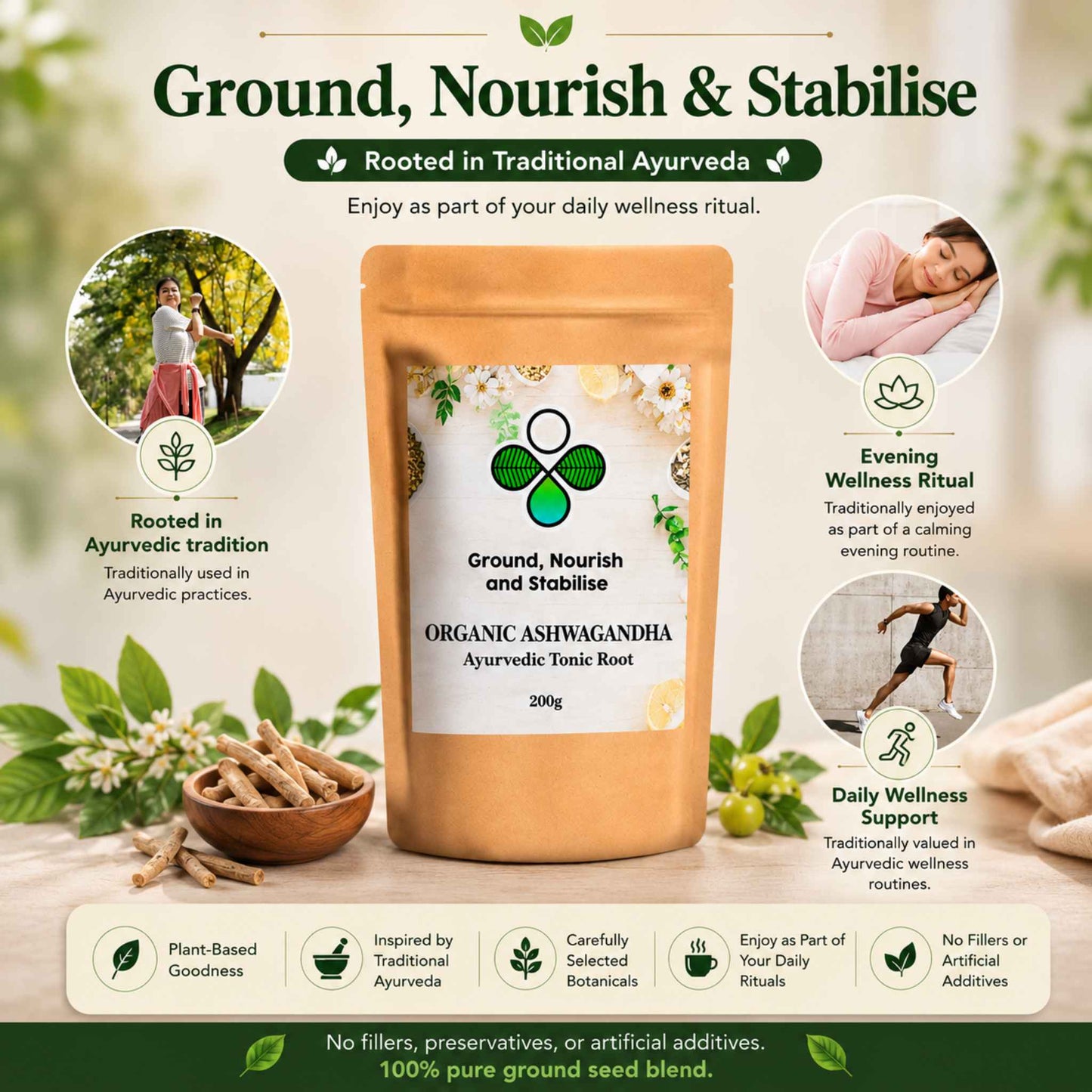
In Sanskrit, Ashwagandha means "essence of the horse", a name that speaks directly to its most celebrated qualities: strength, stamina, and grounded vitality. One of Ayurveda's most revered rasayana herbs, Organic Ashwagandha (Withania somnifera / Indian Ginseng / Winter Cherry) root powder has been used for thousands of years to ground, nourish, and stabilise the body and mind when life becomes demanding, fast-paced, or simply in need of deeper replenishment.

Unlike stimulants that borrow energy from tomorrow, Ashwagandha works deeply, nourishing and supporting the nervous system from within, supporting a naturally calm and grounded daily experience, and restoring vitality to the tissues that sustain everyday energy, strength, and resilience. Traditionally, it is Ayurveda's premier nervine tonic and adaptogenic herb: settling when the nervous system needs calm, restoring when vitality needs replenishment, and deeply nourishing to the bones, reproductive tissues, and Ojas (vital essence) over time.

Classified in Ayurveda as a Vata and Kapha balancing herb, Ashwagandha is a natural daily tonic for anyone seeking deeper calm, more restful nights, sustained natural energy, and whole-body vitality. Its Latin species name, somnifera, is a reference to the restful, grounding quality that centuries of Ayurvedic use have associated with this remarkable herb.

Part of Kimmana Nichols' Custom Formula: Ashwagandha is one of the key herbs in Kimmana Nichols' custom-designed Sandalwood Saffron Blue Lotus Herbal Tea – Ayurvedic Blend by Vitality Now. In that formula, Ashwagandha contributes its naturally grounding, adaptogenic, and Ojas-building qualities alongside Saffron, Sandalwood, Blue Lotus, Skullcap, Chamomile, and Nutmeg, creating a complete Ayurvedic blend for inner ease and restful evenings. Explore Sandalwood Saffron Blue Lotus Herbal Tea

Ashwagandha is also part of Kimmana Nichol's 16-herb blend Ojas Nectar which aids in digestion, assimilation, and tissue transformation.

Benefits

• Calms and nourishes the nervous system, supporting a grounded, steady sense of energy throughout the day

• Supports restful, natural nights and a settled, restorative sleep routine

• Supports the body's natural adaptogenic response and a sense of calm, balanced daily energy

• Traditionally valued as an adaptogen for natural everyday stress ease, supporting inner calm and grounded vitality

• Strengthens and nourishes bones (Asthi dhatu) and connective tissue, traditional Ayurvedic bone nourishment

• Supports natural reproductive vitality and sexual wellness in both men and women

• Supports natural male vitality and reproductive wellness, traditionally used in Ayurveda for Shukra dhatu nourishment

• Builds Ojas, the Ayurvedic vital essence governing natural resilience, recovery, and radiant vitality

• Supports physical endurance, natural muscle recovery, and active wellbeing

• Supports mental clarity, natural focus, and a calm, clear mind

• Supports natural Ojas vitality, nourishing the body's deep resilience with consistent daily use

• Nourishes the deeper tissues (Shukra dhatu) for long-term vitality and longevity

• Supports joint comfort and ease of movement as part of an active lifestyle

Directions for Use

Standard dose: 1–2 teaspoons (approximately 3–6 grams), 1–3 times per day, or as advised by your Ayurvedic practitioner.

With warm water: Stir into a glass of warm water and drink. Warm liquid supports absorption and the herb's grounding action.

With warm milk (traditional): The classic Ayurvedic preparation is to simmer 1–2 teaspoons in warm dairy or plant-based milk, sweetened with honey or jaggery. This is the traditional Ashwagandha Ksheerapaka (milk decoction), ideal taken before bed to support restful nights and overnight tissue nourishment.

With food: Mix into porridge, smoothies, or warm breakfast dishes for a convenient daily dose.

With ghee or honey: For deeper tissue nourishment and enhanced Ojas building, blend with a small amount of warm ghee or raw honey.

Timing, for restful evenings: Take 1–2 teaspoons in warm milk before bed to support a settled, restorative evening and natural overnight restoration.

Timing, for daily energy and calm: Take 1–2 teaspoons with warm water in the morning or with meals to support daily adaptogenic ease and sustained, grounded energy.

Long-term use: As a Rasayana herb, Ashwagandha's deepest benefits, natural Ojas resilience, restful nights, improved stamina and vitality, build with consistent daily use over weeks and months.

Note: Please consult your healthcare practitioner before use if you are pregnant, breastfeeding, or taking medications, particularly thyroid medications.

Key Botanicals

Ashwagandha root powder (Withania somnifera), certified organic, whole root, ground

No fillers, binders, preservatives, or additives. 100% pure organic Ashwagandha root powder.

  • benefits of ashwagandha herb

Frequently Asked Questions

What is Ashwagandha and why is it called a nervine tonic in Ayurveda? +

Ashwagandha (Withania somnifera / Indian Ginseng / Winter Cherry / Aswagandha) is one of Ayurveda's most revered Rasayana herbs, used for thousands of years as both an adaptogenic and nervine tonic. In Ayurvedic classification, a nervine tonic is a herb that nourishes and strengthens the nervous channels (Majja dhatu and Vata channels) over time. Ashwagandha's unique combination of grounding, strengthening, and naturally calming aromatic qualities has made it the premier nervine Rasayana in the Ayurvedic tradition. It is not a treatment for any medical condition.

How do I take Ashwagandha powder? +

The classical Ayurvedic preparation for Ashwagandha is Ksheerapaka, simmered in warm full-fat dairy or plant-based milk with a small amount of honey or jaggery, taken in the evening. It can also be stirred into warm water, blended into smoothies, or mixed into porridge. Standard dose is ½–1 teaspoon (approximately 3–5 grams) once or twice daily. Always consult your healthcare practitioner before beginning use, particularly if you are pregnant, breastfeeding, or taking thyroid medications.

Is Ashwagandha suitable for both men and women? +

Yes, Ashwagandha is traditionally used for both men and women in Ayurveda as a Rasayana (rejuvenating tonic) that supports natural vitality, Ojas (vital essence), and physical and nervous system nourishment for all constitutions. Its Shukra dhatu (reproductive tissue) nourishing action is traditionally valued in both men and women for supporting natural reproductive vitality and physical endurance. Please consult your healthcare practitioner before use during pregnancy.

Can Ashwagandha help with stress and anxiety? +

Ashwagandha is Ayurveda's foremost adaptogenic nervine herb, traditionally used for thousands of years to support a naturally grounded, calm, and settled state during demanding or stressful periods of life. Its Vata-pacifying and nervous channel-nourishing action is traditionally valued for supporting natural inner ease and mental resilience. Ashwagandha is not a treatment for anxiety disorder, stress disorders, or any mental health condition. Please consult your healthcare practitioner for significant mental health concerns.

Can Ashwagandha support sleep and restful nights? +

Ashwagandha's Latin species name somnifera reflects its centuries-long traditional association with supporting naturally restful, restorative evenings, a use deeply embedded in Ayurvedic practice. The classical evening milk preparation (Ksheerapaka) is specifically designed to support a naturally settled, grounded state that prepares the body and mind for rest. Ashwagandha is not a treatment for insomnia or any sleep disorder. Consult your healthcare practitioner for sleep concerns.

Can Ashwagandha support physical strength and muscle recovery? +

Ashwagandha is classified in Ayurveda as a Balya (strength-promoting) and Brimhana (nourishing and building) herb, traditionally used to support natural physical strength, stamina, and tissue nourishment. It is a classical herb in Ayurvedic athletic care for supporting the body's natural recovery and physical vitality with consistent use. Ashwagandha is not a treatment for any physical condition or sports medicine concern.

What is the difference between Ashwagandha and Shatavari for vitality support? +

Both are premier Ayurvedic Rasayana herbs but with distinct focuses. Ashwagandha is primarily warming, grounding, and strengthening, particularly associated with Vata and Kapha balance, physical strength, nervous system nourishment, and male reproductive vitality. Shatavari is cooling, nourishing, and moistening, particularly associated with Pitta balance, female reproductive wellness, and deeply nourishing the tissues. Many Ayurvedic formulas such as Ojas Nectar combine both for comprehensive Rasayana support.