


Vitality Now Products
Calming Tea with Sandalwood, Saffron & Blue Lotus – Ayurvedic Vata Blend
Calming Tea with Sandalwood, Saffron & Blue Lotus – Ayurvedic Vata Blend
Our premium Vata-balancing tea — sweet, floral, moistening and deeply grounding. 14 certified-organic botanicals • Naturally caffeine-free • Formulated by Kimmana Nichols
Couldn't load pickup availability
Created as Vitality Now's most specifically Vata-balancing tea, this premium 14-herb formula combines sweet Yashtimadhu, nourishing Ashwagandha, aromatic Sandalwood and Saffron, floral Blue Lotus and Chamomile with gently warming spices.
The first sip is naturally sweet, floral and softly spiced, developing into an unusually long aromatic aftertaste. Regular drinkers often describe a wave of grounding, downward-settling energy that follows the cup — calming in character without feeling heavy or sedating.
In Ayurvedic terms, the formula brings together Madhura (sweet), Snigdha (moistening or unctuous), nourishing and grounding qualities to oppose Vata's tendency towards dryness, lightness, coldness and excessive movement.
Naturally caffeine-free.


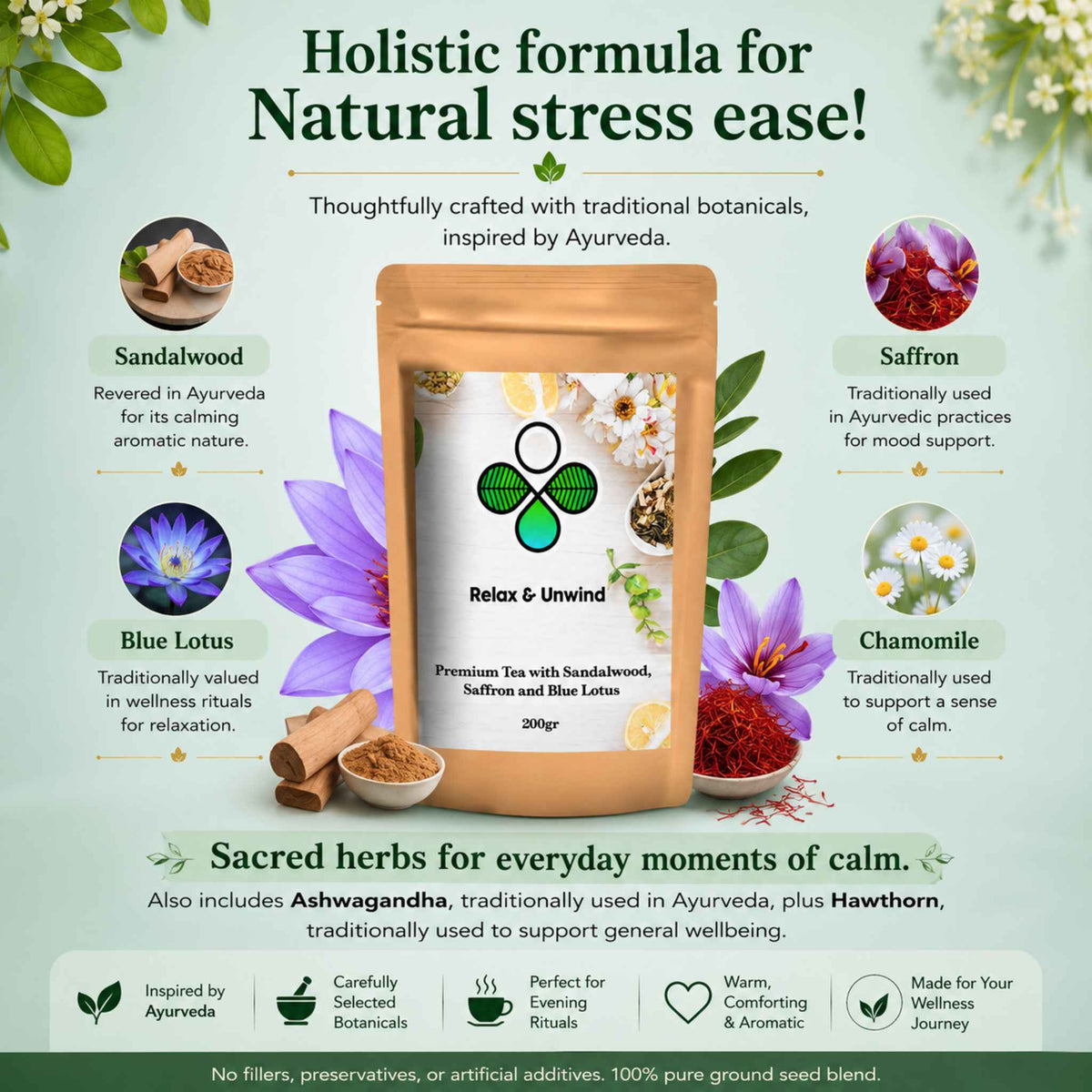

What Makes This Tea Different
This is not a simple calming tea with a few extra herbs added. It is a deliberately layered 14-herb formula, designed around flavour, Ayurvedic energetics and the qualities traditionally used to balance Vata.
-

Naturally Sweet
Yashtimadhu (Licorice) and Sandalwood help give this tea its naturally sweet and rounded flavour, softening sharper or more bitter herbal notes. In Ayurveda, Madhura — the sweet taste — is traditionally considered nourishing and balancing for Vata.
-

Intentionally Moistening
Vata is traditionally Ruksha — dry. This formula includes botanicals chosen for their Snigdha, or moistening and unctuous qualities, including Yashtimadhu, Ashwagandha and Fennel. Hot-water infusion also draws naturally occurring sugars, glycosides, polysaccharides and mineral ions from the herbs into the cup.
-

Grounding Without Heaviness
Regular drinkers often describe a distinctive downward-settling quality after a cup — a feeling of becoming more grounded and less scattered while still feeling clear. This steadier character is central to the tea’s Vata-balancing design.
-

A Flavour That Keeps Unfolding
The first sip is naturally sweet, floral and softly spiced, followed by a long aromatic finish. Saffron, Blue Lotus and aromatic herbs and spices give the blend its distinctive character, while Cardamom, Fennel, Galangal, Pippali and Nutmeg create warmth and complexity underneath.
-

Formulated, Not Simply Blended
Fourteen certified-organic botanicals work together as one formula. Some bring sweetness, others moisture, gentle warmth, aroma or grounding qualities. The result is a deliberately constructed Vata tea rather than a collection of unrelated calming herbs.


Why This Formula Works So Differently
Tradition, sensory experience and modern plant chemistry all point to the same thing: these herbs were not chosen simply because they are known as “calming”. Each brings a different quality — sweetness, nourishment, aromatic depth, grounding or sensory ease — and together they create the distinctive settling character of this Vata formula.
Yashtimadhu — Sweet Harmoniser
Traditional lens
In Ayurveda, Yashtimadhu is deeply Madhura (sweet) and Snigdha (unctuous/moistening) — qualities traditionally used to soften and nourish Vata.
In the cup
Its lingering sweetness smooths sharper and more bitter herbal notes and helps the softer character of Sandalwood, Saffron, Blue Lotus and the aromatic spices come forward as one integrated flavour.
Plant chemistry
Liquorice is rich in glycyrrhizin, the triterpene saponin behind much of its distinctive long-lasting sweetness, alongside flavonoids and hot-water-extractable polysaccharides.
Ashwagandha — Nourishing Steadiness
Traditional lens
Ashwagandha is one of Ayurveda's great Rasayana and Brimhana herbs — traditionally nourishing, strengthening and Vata balancing. Its Snigdha quality is particularly relevant where Vata feels not only mobile, but depleted, dry or worn down.
In the cup
Ashwagandha adds earthy body and nourishment beneath the floral and aromatic herbs. It helps give the formula its sense of steadiness rather than simply making it a collection of herbs intended to make you sleepy.
Plant chemistry
Ashwagandha contains characteristic withanolides alongside other root constituents. Research with aqueous Ashwagandha extracts has demonstrated direct activity at GABA-related receptors, while broader research points towards GABAergic, serotonergic and stress-response pathways. Human trials and meta-analyses have also reported improvements in sleep and stress-related outcomes.
Saffron — Brightening Ease
Traditional lens
Kumkuma (Saffron) is one of Ayurveda's most prized aromatic botanicals. Its warming, Snigdha character brings refinement to a Vata formula — warmth without the harsh dryness of relying only on strongly pungent spices.
In the cup
A small amount transforms the entire tea: golden colour, honeyed-floral aroma, a subtle bitter complexity and the long, luxurious finish that makes the blend feel distinctly different from an ordinary herbal tea.
Plant chemistry
Saffron's signature compounds include crocin, crocetin and safranal. These compounds have attracted considerable research around brain signalling, mood and sleep, while human trials and systematic reviews of Saffron itself have reported benefits across mood and sleep-related measures.
Sandalwood — Grounded Quiet
Traditional lens
Chandana (Sandalwood) has a long place in Indian herbal, aromatic and contemplative traditions. Its cooling aromatic character is traditionally associated with settling excess intensity while maintaining clarity.
In the cup
Sandalwood creates the low, woody-sweet aromatic base underneath the flowers and spices. It is part of what makes the blend feel grounded rather than simply floral or perfumed.
Plant chemistry
Sandalwood contains the sesquiterpene alcohols α-santalol and β-santalol. In experimental research these compounds showed central nervous system activity even when given orally, alongside measurable changes in brain metabolites related to dopamine and serotonin signalling — an intriguing modern parallel to Sandalwood's long traditional reputation for quieting and settling.
Blue Lotus — Floral Uplift
Traditional lens
Blue Lotus (Nymphaea caerulea) is not a classical Ayurvedic herb, but it has an extraordinary history of its own. It appears repeatedly in ancient Egyptian ceremonial, banquet and sensual imagery, giving the flower a long association with beauty, ritual, pleasure and heightened sensory experience.
In the cup
Its floral, softly sweet and slightly fruity character lifts the heavier roots and woods, adding an almost ethereal top note to the tea without losing the grounding character underneath.
Plant chemistry
Modern investigation of Nymphaea caerulea has identified aporphine alkaloids, including nuciferine and apomorphine, in some plant materials. These compounds interact with dopamine signalling, offering an intriguing modern lens through which to view Blue Lotus's long mind-and-senses reputation.
Chamomile + Skullcap — Settled Clarity
Traditional lens
Chamomile and American Skullcap have long traditions in Western herbalism for the quieter end of a busy day. Skullcap is particularly known as a relaxing nervine, while Chamomile brings softness and familiarity to the ritual.
In the cup
Chamomile contributes gentle floral sweetness while Skullcap adds a quieter green-herbal depth. Together they contribute a softer, more settling layer to the formula, balancing the richness of the roots, woods, florals and warming aromatics.
Plant chemistry
Chamomile contains apigenin, a flavonoid studied for its interaction with GABA-related receptor systems. American Skullcap contains characteristic flavones including baicalin, baicalein, wogonin and scutellarin, and GABA itself has been detected in its water extracts. A controlled human trial also found improved overall mood with Skullcap without reducing energy or cognition.
The Aromatic Support Team
Cardamom, Fennel, Galangal, Pippali and Nutmeg weave gentle warmth and aromatic movement through the heavier, sweeter and more nourishing herbs. They keep the formula from feeling flat or overly heavy, while contributing to the layered spice that continues long after the first sip.
The intention is not heaviness or sedation. It is a slower, softer kind of clarity — grounded enough to settle, while still feeling like yourself.
Make It Your Ritual
The simplest way to make this part of a daily Vata ritual is to brew a pot once and return to it through the day — often one cup between lunch and dinner, then another after dinner. It also makes a beautiful pot to share. Any remaining tea can be refrigerated once cool and enjoyed the next day, warm or cool.
-

A Pot for the Day
Add 2–3 teaspoons of tea to at least 1 litre of water. Place the lid on and bring just to the boil. As soon as it begins to boil, turn off the heat and allow the herbs to steep, covered, for 5–10 minutes. Strain as you pour.
Brew once, return to it later — or place the pot between two cups and share the ritual.
-

One Cup
Use 1 teaspoon of tea per cup of freshly boiled water. Place the herbs in a tea infuser or strainer, cover and steep for 5–7 minutes. Remove the strainer and enjoy.
For a fuller, deeper cup, simply allow it to steep longer.
-

Thermos
Use 1 teaspoon per 500 mL of freshly boiled water. Add the herbs directly to the thermos, close the lid and steep for at least 10 minutes. Pour through a tea strainer as you drink.
A longer steep gives a stronger, deeper infusion — ideal when you want the tea with you for several hours.
Taking your tea with you? Our Vitality Now Swiss Peak Thermos makes this method especially easy.


When to Drink It
A favourite rhythm is one cup between lunch and dinner, followed by another after dinner as the pace of the day begins to soften. It can also be enjoyed whenever things feel too fast, light or scattered and you want to bring a little more warmth, sweetness and steadiness into the moment. Naturally caffeine-free.
Taste It Your Way
The tea is naturally sweet enough to drink on its own. It can also be enjoyed with warm milk if you prefer a richer, softer cup.
