Skip to product information
1 of 3

Vitality Now Products

Organic Trikatu – Ayurvedic Warming Digestive Blend for Gut Wellness, Natural Metabolism & Energy

Organic Trikatu – Ayurvedic Warming Digestive Blend for Gut Wellness, Natural Metabolism & Energy

Regular price $10.00
Regular price Sale price $10.00
Sale Sold out
Size
View full details

About This Formula

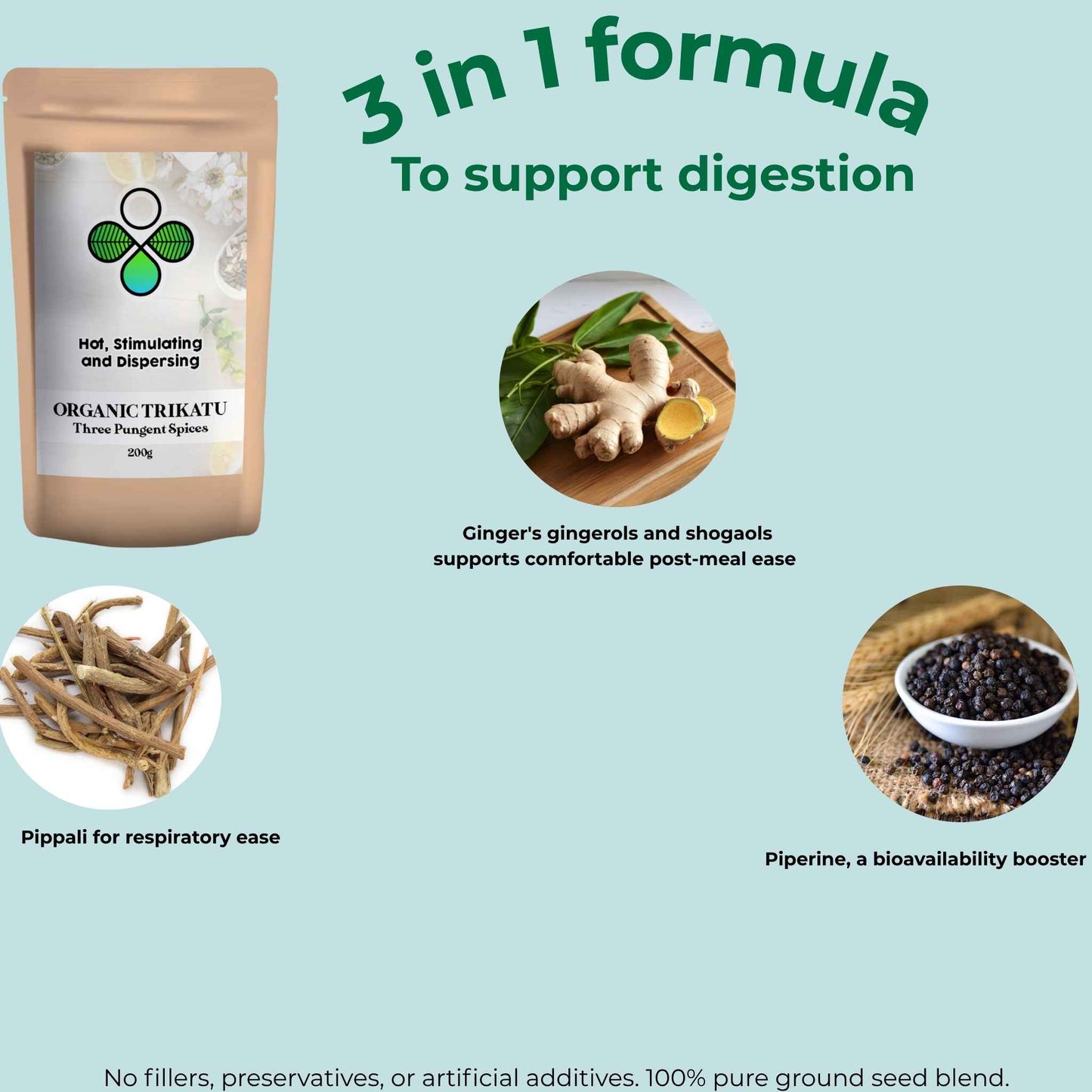
Trikatu, Sanskrit for "three pungents", is one of the most important and widely used classical formulas in the entire Ayurvedic tradition. Cited in both the Charaka Samhita and Sushruta Samhita, Ayurveda's two most authoritative ancient texts, Trikatu combines three of the world's most potent warming spices in perfect synergy: Ginger (Zingiber officinale / Sunthi / Shunthi), Black Pepper (Piper nigrum / Maricha), and Pippali / Long Pepper (Piper longum). Together, they form Ayurveda's primary formula for rekindling Agni, the digestive fire, and restoring warmth, tone, and metabolic clarity to a slow, cold, or sluggish system.

The genius of Trikatu lies in the synergy of its three ingredients. Each brings its own distinct warming, penetrating, and digestive-supporting action, yet together they achieve something greater than anyone could accomplish alone. Ginger's broad digestive and naturally settling action, Black Pepper's naturally potentiating piperine, and Pippali's uniquely deep tissue-penetrating and traditional respiratory seasonal wellness properties combine to create a formula that simultaneously kindles surface Agni, supports the natural bioavailability of other botanical compounds, clears Ama (accumulated metabolic residue) from the digestive tract, and warms the tissues from the outermost layer to the deepest dhatus (tissues).

In Ayurvedic practice, Trikatu is considered the specific formula for Kapha and Vata type digestive heaviness, the kind of slow, cold, heavy, congested digestive experience associated with excess Kapha or cold Vata, and is simultaneously one of the most effective natural Yogavahi (potentiating) herbs in Ayurvedic medicine, traditionally understood to support the natural expression of everything taken alongside it. A foundational classical formula used across thousands of years of continuous Ayurvedic practice.

Benefits

• Powerfully kindles Agni (digestive fire), Trikatu is Ayurveda's most direct and effective classical formula for restoring warmth and tone to a slow, cold, or sluggish digestive system

• Supports comfortable, settled post-meal digestion, easing occasional post-meal heaviness, gas, and abdominal discomfort through its naturally carminative and warming digestive action

• Supports the body's natural clearing of Ama (accumulated metabolic residue) from the digestive tract, kindling the metabolic fire that naturally moves undigested residue through the tract

• Supports natural metabolic ease and healthy daily metabolic tone, promotes natural digestive ease and comfortable nutrient assimilation

• A natural Yogavahi (potentiating) formula, Trikatu's piperine (from Black Pepper and Pippali) supports the natural bioavailability of curcumin and other botanical compounds taken alongside it

• Supports natural digestive ease, traditionally used to support the natural activation of the digestive system for comfortable and thorough food breakdown

• Supports a naturally balanced digestive environment, traditionally used in Ayurveda to support the body's natural maintenance of a clean, well-functioning digestive ecosystem

• Supports natural respiratory ease and clear, comfortable breathing, the three pungents are traditionally used to naturally move accumulated Kapha from the respiratory passages during seasonal transitions

• Supports natural warmth and comfortable circulation throughout the body, particularly valuable for those with cold constitutions, cold hands and feet, or a naturally Kapha-dominant or cold Vata constitution

• Supports healthy natural appetite and the comfortable return of hunger before meals, in Ayurveda, natural appetite is considered an essential sign of healthy Agni

• Balances Vata and Kapha doshas, Trikatu is the classical formula specifically indicated for cold, heavy, slow, or congested Kapha and Vata type digestive and metabolic constitutions

• Supports natural Ojas vitality and seasonal wellness, all three ingredients are traditionally valued in Ayurveda for supporting natural seasonal resilience and Ojas

Directions for Use

Standard dose: 500 mg – 2 grams (approximately ¼ to ½ teaspoon), up to three times per day in warm water before or with food, or as directed by your Ayurvedic practitioner.

Before meals (most effective for digestion): Mix 500 mg – 1 gram in a small glass of warm water and drink 10–15 minutes before eating. Taking before meals primes the digestive system and prepares the body for comfortable, efficient digestion.

With warm water: Stir the powder thoroughly into a glass of warm water and drink. Warm water enhances Trikatu's warming, Agni-kindling action and supports natural absorption.

With honey (traditional for Kapha conditions): Mix ¼–½ teaspoon with a small amount of raw honey and take before meals. Honey is the traditional Ayurvedic carrier for Trikatu, it traditionally supports the formula's action on the respiratory passages and upper channels. Do not mix with hot liquid.

With ghee (for Vata constitutions): Mix a small amount with warm ghee before meals. Ghee as carrier directs Trikatu's warmth into the deeper tissues and is particularly suited to those with a cold, dry, or Vata-dominant constitution.

As part of a herbal formula: Trikatu is Ayurveda's premier Yogavahi formula, adding even ¼ teaspoon of Trikatu to any herbal blend supports the natural bioavailability and expression of all other herbs in the formula. It is included in over 300 classical Ayurvedic formulations for this reason.

In warm food or drink: Sprinkle a small amount into warm soups, dal, herbal teas, or golden milk. A traditional culinary-wellness approach that builds gentle daily digestive support naturally into meals.

Note: Trikatu is a warm, Pitta-stimulating formula. Those with a naturally warm, Pitta-dominant constitution should use with care and in smaller doses. Please consult your healthcare practitioner before use if you are pregnant, breastfeeding, or taking medications.

Key Botanicals

Ginger root (Zingiber officinale / Sunthi / Shunthi), certified organic, dried root, ground

Black Pepper (Piper nigrum / Maricha), certified organic, dried fruit, ground

Pippali / Long Pepper (Piper longum), certified organic, dried fruit, ground

Equal parts of each. No fillers, binders, preservatives, or additives. 100% pure certified organic Trikatu powder.

  • benefits of ginger herb
  • benefits of black pepper
  • benefits of long pepper, pippali

Frequently Asked Questions

What is Trikatu and what does 'three pungents' mean in Ayurveda? +

Trikatu, meaning 'three pungents', is one of Ayurveda's most important and widely used classical formulas, combining Ginger (Zingiber officinale / Sunthi / Sonth), Black Pepper (Piper nigrum / Maricha / Kali Mirch), and Pippali / Long Pepper (Piper longum) in equal parts. Together they form Ayurveda's most direct and effective Agni (digestive fire) kindling formula, used across thousands of years of classical Ayurvedic practice as the foundation for warming, metabolic wellness and digestive ease. It is not a treatment for any medical condition.

How do I take Trikatu powder? +

Trikatu is typically taken in small amounts, ¼ to ½ teaspoon with warm water, honey, or ghee before or with meals. Honey is the traditional carrier for Kapha conditions; ghee directs its action deeper into the tissues for Vata. It can also be sprinkled in small amounts into warm cooked food after removing from heat. As Ayurveda's premier Yogavahi (potentiating) formula, even a small pinch alongside other herbs supports their natural expression. Always consult your healthcare practitioner before use, particularly if you have a Pitta-dominant constitution.

Is Trikatu suitable for all body types? +

Trikatu is a warm, stimulating formula primarily suited to Vata and Kapha constitutions, those who tend toward cold, sluggish, or heavy digestive tendencies. It should be used with care by those with a naturally warm, Pitta-dominant constitution or heat-sensitive digestion, as its strongly warming nature can be too stimulating for excess Pitta. Those with Pitta tendencies are generally better served by CCF or a smaller dose of Trikatu taken with cooling carriers like milk.

Can Trikatu help with sluggish digestion and bloating? +

Trikatu is Ayurveda's most direct formula for addressing cold, sluggish, Vata-Kapha digestive heaviness, the kind of slow, heavy, post-meal bloating and digestive fatigue associated with low or cold Agni. Its three warming spices work synergistically to kindle the digestive fire from both the surface (Ginger) and deep tissues (Pippali) simultaneously. Trikatu is not a treatment for any digestive disorder. Please consult your healthcare practitioner for persistent digestive concerns.

Can Trikatu support natural turmeric absorption? +

Trikatu is Ayurveda's foremost Yogavahi (potentiating) formula, traditionally used to support the natural bioavailability and expression of other botanical compounds taken alongside it. Both Pippali and Black Pepper contain naturally occurring piperine alkaloids, which modern botanical research has explored for their role in supporting the natural bioavailability of curcumin from turmeric, consistent with classical Ayurvedic practice of combining Trikatu with turmeric preparations.

What is the difference between Trikatu and CCF for everyday digestive support? +

CCF (Cumin, Coriander, Fennel) and Trikatu are both classical Ayurvedic digestive formulas but they are very different in character. CCF is cooling, gentle, and tridoshic, a mild everyday digestive tea suitable for all body types including Pitta. Trikatu is hot, strongly stimulating, and specifically targeted at Vata and Kapha cold, sluggish digestion. CCF is the milder everyday option for all constitutions; Trikatu is the stronger warming formula for cold and heavy digestive tendencies.