Vitality Now Products
Organic Yarrow – Ayurvedic Herbal Tea & Powder for Natural Seasonal Vitality, Circulation & Skin Wellness
Couldn't load pickup availability
Share

About This Herb
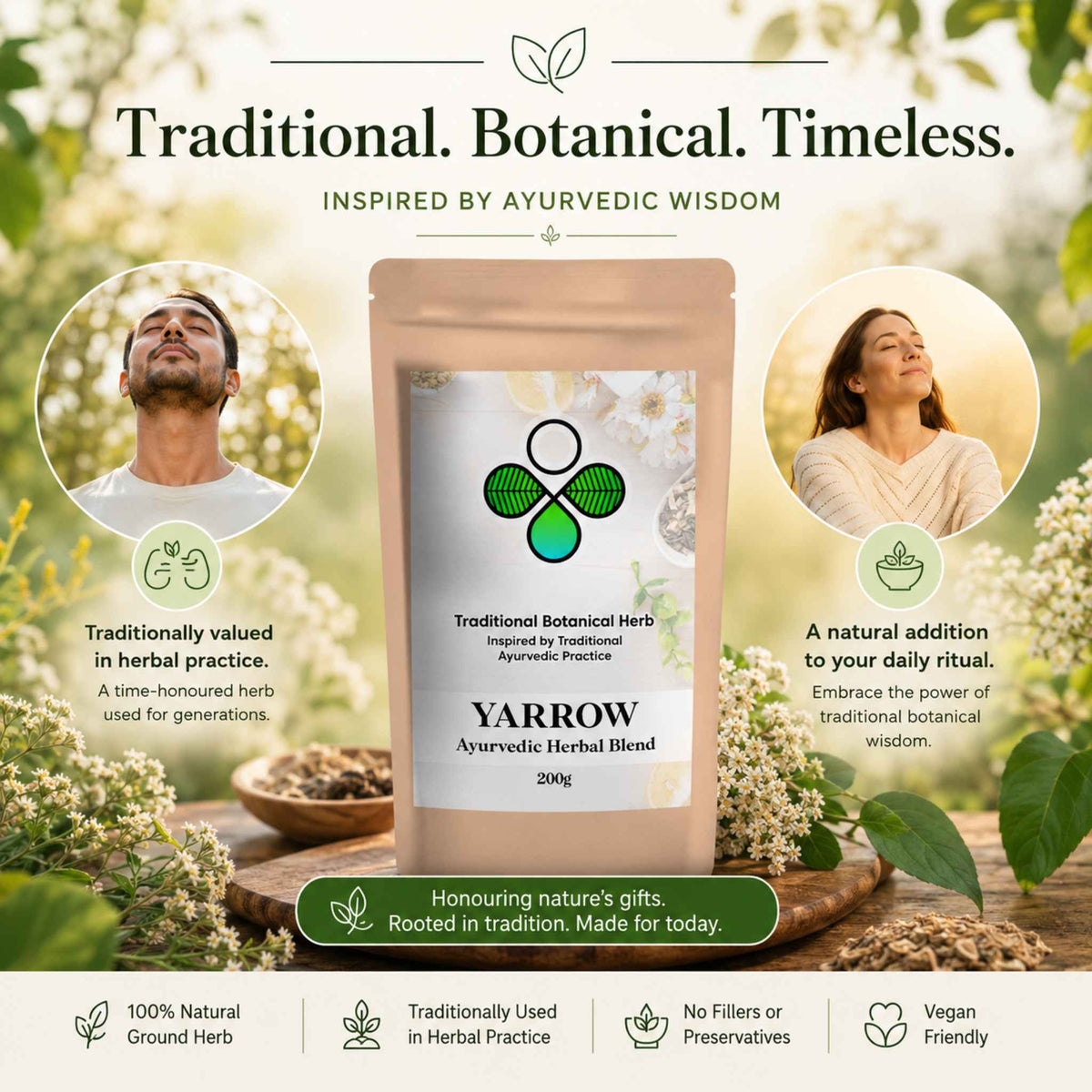
Yarrow (Achillea millefolium) is one of the oldest and most widely revered herbs in the world's healing traditions, used continuously for over 3,000 years across Western herbalism, Ayurveda, Traditional Chinese Medicine, and the healing traditions of Native American peoples across North America. Named after the Greek hero Achilles, who is said to have used it on the battlefield to tend to his soldiers' wounds, Yarrow has earned a place in virtually every traditional healing culture on earth for its remarkable versatility and botanical complexity.
In Ayurveda, Yarrow is known as Biranjasipha and is classified as a bitter (tikta) and pungent (katu) herb with a cooling-to-neutral energy. It is traditionally used to support Pitta and Kapha balance, and is valued as a gentle tonic for natural circulation, seasonal skin ease, and natural cleansing of the blood and lymph in classical Ayurvedic practice. Its breadth of traditional use across so many independent healing traditions, arriving at similar conclusions independently, speaks to the genuine depth of this herb's botanical character.
Yarrow is also part of Kimmana Nichols' custom-designed formula, Anti-Ama Tea, a classical Ayurvedic detox and digestive wellness blend in which Yarrow contributes its naturally bitter, cleansing, and circulation-supporting qualities alongside Guduchi, Tulsi, Ginger, Turmeric, and twelve other Ayurvedic herbs. Explore Anti Ama Tea

Benefits
For Natural Seasonal Vitality
- Traditionally used in Western herbalism and Ayurveda as a natural seasonal wellness herb, valued for supporting the body's natural seasonal ease during winter and cold weather transitions
- Traditionally used to support the body's natural heat-releasing mechanisms during seasonal changes, a classic Western herbal use for Yarrow tea during seasonal wellness routines
- Supports natural respiratory ease during seasonal transitions, valued in both Ayurveda and Western herbalism for supporting comfortable, clear breathing
- One of the most widely used traditional herbs for seasonal wellness across Native American, European, and Ayurvedic healing traditions
For Natural Circulation & Lymphatic Ease
- Traditionally used in Ayurveda and Western herbalism to support natural circulation and healthy blood flow as part of a daily wellness routine
- Valued as a natural tonic for supporting the body's lymphatic ease and natural fluid movement, used in classical Ayurvedic practice as a Rakta shodhana (blood and lymph supporting) herb
- Naturally astringent character, gently toning wherever tissues benefit from a gathering, firming quality
- Traditionally used to support the body's natural pelvic and reproductive wellness as a gentle tonic herb, a classical Western herbal and Ayurvedic use for Yarrow in women's wellness routines
For Skin Wellness
- Traditionally valued for supporting naturally clear, healthy skin, its Rakta shodhana (blood and lymph supporting) action in Ayurveda is traditionally associated with skin clarity and natural radiance
- Naturally astringent tannins gently tone the skin and support a naturally balanced complexion when used as a facial rinse
- Yarrow tea used as an external skin rinse is a centuries-old European herbal tradition for skin tone and surface ease
- Supports naturally balanced, healthy-looking skin with consistent daily use as part of a holistic Ayurvedic wellness routine
For Digestive Ease
- Traditionally used in Western herbalism and Ayurveda to support natural digestive ease and comfort after meals, its bitter action gently supports natural digestive secretions and post-meal ease
- Valued as a natural carminative, supporting comfortable digestion and natural ease from occasional post-meal heaviness
- A key component of Kimmana Nichols' Anti-Ama Tea formula, contributing its natural bitter and cleansing qualities to support digestive fire (Agni) and natural Ama-clearing
Directions for Use
As a Herbal Tea (Most Common)
- Standard preparation: Add 1 teaspoon of Yarrow powder to 250–300ml of just-boiled water. Steep for 5–10 minutes, strain, and drink warm. One to three cups per day is a traditional Western herbal dosage.
- Seasonal wellness tea: Drink 2–3 cups of warm Yarrow tea during the day as part of a seasonal wellness routine in winter and during seasonal transitions.
- With lemon and honey: Add a squeeze of lemon and a small amount of raw honey after the tea has cooled slightly for palatability, Yarrow has a distinctly bitter, pungent flavour.
- Blended with other herbs: Yarrow combines traditionally with Elderflower, Peppermint, and Ginger in Western herbal blends, and with Tulsi, Guduchi, and Ginger in Ayurvedic formulas such as Anti-Ama Tea.
As a Powder in Food
- Mix a small amount (¼ teaspoon) into warm soups, broths, or stews for a bitter, herbal dimension and daily wellness support.
- Add to smoothies or juices, noting its distinctly bitter flavour, best blended with naturally sweet fruits or honey to balance.
As an External Rinse (Traditional)
Prepare a strong Yarrow tea decoction (simmer 1 teaspoon in 2 cups of water for 10 minutes, strain and cool). Use as a gentle facial or body rinse for skin tone and surface ease. A traditional European herbal practice for skin wellness.
Precautions
Yarrow is not recommended during pregnancy.
People with known sensitivity to plants in the Asteraceae/Compositae family (including chrysanthemums, marigolds, and daisies) should consult a healthcare practitioner before use.
As with any herbal supplement, consult your healthcare practitioner before use if you are taking medications or have an existing health condition.
Key Botanicals
Yarrow aerial parts powder (Achillea millefolium), certified organic
No fillers, binders, preservatives, or additives. 100% pure certified organic Yarrow powder.
Why it works?
Frequently Asked Questions
What is Yarrow and how is it used in Ayurveda and Western herbalism? +
Yarrow (Achillea millefolium / Biranjasipha / Soldier's Herb / Milfoil) is one of the world's most revered and versatile traditional herbs, used across Western herbalism, Ayurveda, Traditional Chinese Medicine, and Native American healing traditions for over 3,000 years. In Ayurveda it is known as Biranjasipha and classified as bitter, pungent, and cooling, traditionally valued for natural circulation support, skin wellness, and seasonal ease. It is not a treatment for any medical condition. Yarrow is also part of Kimmana Nichols' custom-designed Anti-Ama Tea formula.
How do I prepare Yarrow as a herbal tea? +
Yarrow is most traditionally prepared as a hot herbal tea, steep 1 teaspoon of Yarrow powder in 250ml of just-boiled water for 5–10 minutes, strain, and drink warm. One to three cups per day is a traditional Western herbal dosage. A squeeze of lemon and honey can improve palatability as Yarrow has a distinctly bitter, pungent taste. It can also be combined with Elderflower and Peppermint in traditional Western herbal blends, or with Tulsi and Ginger in Ayurvedic formulas.
Can Yarrow support natural circulation and natural skin wellness? +
Yarrow has been used across Ayurvedic and Western herbal traditions for supporting natural circulation and naturally clear, healthy-looking skin, its Rakta shodhana (blood-supporting) and naturally astringent tannin action are traditionally valued for supporting the body's natural blood and lymph wellness. Many Ayurvedic practitioners include Yarrow as part of seasonal skin wellness programs. Yarrow is not a treatment for any circulatory or skin condition. Consult a healthcare professional for diagnosed concerns.
Can Yarrow support natural seasonal wellness and respiratory ease? +
Yarrow has been one of the most widely used seasonal wellness herbs in Western and Ayurvedic tradition, its traditional use for supporting the body's natural response during seasonal transitions is one of its most celebrated applications across independent healing cultures. It is naturally warming and gently Kapha-moving. Yarrow is not a treatment for colds, flu, or any respiratory condition. Seek medical care for serious respiratory symptoms.
Is Yarrow safe and are there any precautions? +
Yarrow has a long traditional history of safe use as a herbal tea and wellness herb. However there are specific precautions to be aware of: Yarrow is not recommended during pregnancy. People with known sensitivity to plants in the Asteraceae family (daisies, chrysanthemums, marigolds) should consult a healthcare practitioner before use. As with any herbal supplement, consult your healthcare practitioner before use alongside medications.
Subscribe to our emails
Be the first to know about new collections and exclusive offers.