Skip to product information
1 of 3

Vitality Now Products

Organic Manjistha Powder – Ayurvedic Rakta Shodhana Herb for Skin Radiance, Lymphatic Ease & Natural Glow

Organic Manjistha Powder – Ayurvedic Rakta Shodhana Herb for Skin Radiance, Lymphatic Ease & Natural Glow

Regular price $10.00
Regular price Sale price $10.00
Sale Sold out
Size
View full details

About This Herb

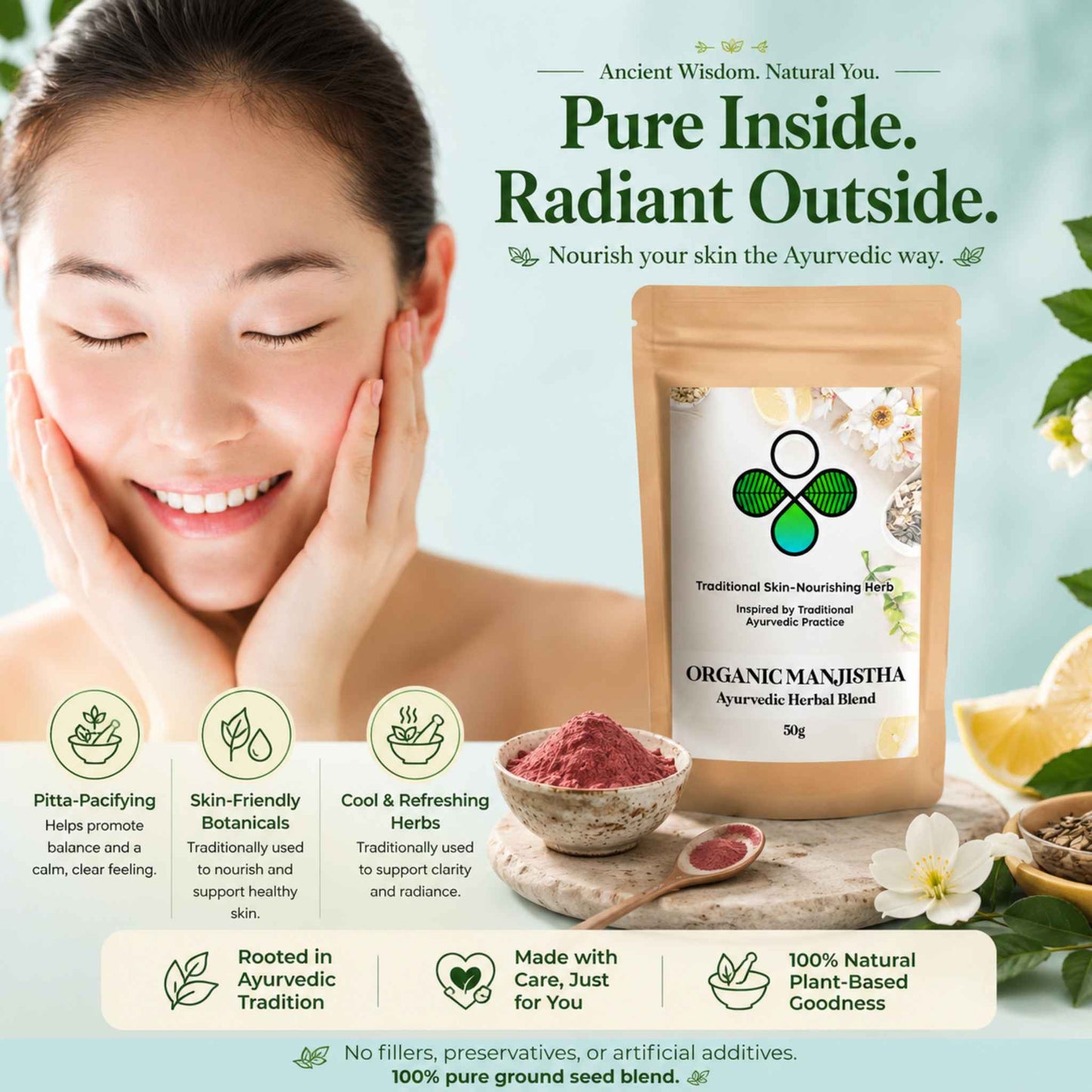
Manjistha (Rubia cordifolia) is a well-known herb in Ayurvedic tradition, traditionally classified as one of the foremost Rakta Shodhana ("blood-purifying") herbs, and long associated with skin radiance in classical Ayurvedic practice. Its Sanskrit name means "bright red," referring to the deep crimson colour of its roots.

In Ayurveda, Manjistha is traditionally classified as bitter, astringent, and cooling, and is traditionally classified as Pitta-pacifying. Classical texts, including those attributed to Charaka, classify Manjistha as Varnya (traditionally, "complexion-supporting") and Vishaghna (traditionally, "detoxification-supporting"). It's traditionally included in Ayurvedic seasonal wellness practices and is a well-known ingredient in classical formulations such as Kumkumadi Tailam.

Traditional Ayurvedic wellness product. Terms such as "Rakta Shodhana," "Varnya," and "Vishaghna" describe traditional Ayurvedic concepts and are not claims of medical or physiological effect on any organ, system, or hormone. This information is not medical advice and has not been evaluated by the TGA. Not intended to diagnose, treat, cure, or prevent any disease.

Manjistha is also part of Kimmana Nichols' custom-designed formula, Anti-Ama Tea, a classical Ayurvedic detox and digestive wellness blend in which Manjistha contributes its blood nourishing qualities alongside Guduchi, Tulsi, Ginger, Turmeric, and twelve other Ayurvedic herbs. Explore Anti Ama Tea

Manjistha is also part of Kimmana Nichols' custom-designed herbal clay mask where Manjistha’s skin where it contributes to the overall blend with its skin nourishing properties. Explore the Clarifying herbal clay mask

Benefits

• Traditionally classified in Ayurveda as the foremost Rakta Shodhana (blood-purifying) herb

• Traditionally associated with skin radiance, in keeping with its traditional classification as Varnya

• Traditionally classified as Pitta-pacifying, traditionally associated with a cool, settled feeling

• Traditionally used as part of Ayurvedic seasonal wellness practices, particularly in spring and autumn

• Naturally rich in antioxidant compounds, including anthraquinones and flavonoids

Directions for Use

Standard preparation: ¼ to 1 teaspoon, decocted in water, taken after meals, up to twice daily, or as directed by your Ayurvedic practitioner.

As a decoction (traditional preparation): Simmer ¼–1 teaspoon of Manjistha powder in 2 cups of water for 10–15 minutes. Strain and sip warm after meals.

With warm water: Stir ¼–½ teaspoon into a glass of warm water and drink after meals for a simpler daily preparation.

With honey: Mix ¼–½ teaspoon with a small amount of raw honey. 

With ghee or milk (for Vata types): If you have a naturally dry or Vata-dominant constitution, take Manjistha with a small amount of warm ghee or milk, traditionally used to offset any drying tendency.

Seasonal use: Traditionally used during spring and autumn as part of an Ayurvedic seasonal wellness practice, often for 4–8 weeks at a time.

Important safety note: Manjistha has mild traditional blood-thinning associations. Please consult your healthcare practitioner before use if you are pregnant, breastfeeding, or taking blood-thinning medication, or if you have a diagnosed medical condition. Not recommended in large doses over extended periods without practitioner guidance.

Key Botanicals

• Manjistha root wood powder (Rubia cordifolia), certified organic, powdered root wood

No fillers, binders, preservatives, or additives. 100% pure certified organic Manjistha root wood powder.

  • benefits of naturally occuring compounds present in manjistha

Frequently Asked Questions

What is Manjistha and what is it used for in Ayurveda? +

Manjistha (Rubia cordifolia / Indian Madder / Majith / Manjishtha) is one of Ayurveda's foremost Rakta shodhana (blood-cleansing) and Pitta-pacifying herbs, used for thousands of years to support naturally clear skin, healthy lymphatic flow, and the body's natural cleansing of blood and tissues. Its deep red root colour reflects its traditional affinity for the blood and lymph tissues (Rakta and Rasa dhatu). It is not a treatment for any medical condition.

How do I take Manjistha powder? +

Manjistha is traditionally taken as ½–1 teaspoon with warm water or warm milk once or twice daily, or as directed by your Ayurvedic practitioner. It can also be used externally as part of an Ayurvedic face mask combined with rose water or honey. Its somewhat bitter, astringent taste means it is often taken in capsule form or blended into a smoothie. Always consult your healthcare practitioner before beginning any new herbal supplement.

Can Manjistha help with acne and skin blemishes? +

Manjistha is Ayurveda's foremost herb for naturally clear, radiant skin, its Rakta shodhana (blood-cleansing) and Pitta-cooling action addresses the internal heat and blood imbalance that Ayurveda associates with heat-type skin concerns. It is one of the primary herbs in classical Ayurvedic skin formulas and has been used for skin wellness for over 3,000 years. Manjistha is not a treatment for acne, cystic acne, or any skin disease. Consult a dermatologist for diagnosed skin conditions.

Can Manjistha support natural lymphatic ease? +

Manjistha is traditionally classified in Ayurveda as a primary herb for the lymphatic channels (Rasa and Rakta dhatu), supporting comfortable lymphatic flow and the natural clearing of metabolic residue from the tissues. It is commonly recommended as part of Ayurvedic lymphatic wellness programs alongside regular self-massage (Abhyanga). Manjistha is not a treatment for lymphoedema or any medical lymphatic condition.

Can Manjistha support natural joint ease and comfort? +

Manjistha's Rakta shodhana and Pitta-cooling action extends to the joints in Ayurvedic understanding, excess Pitta heat in the blood and tissues is associated with joint heat, redness, and discomfort. Manjistha is used in Ayurvedic formulas for joint wellness as part of a blood-cleansing and Pitta-reducing approach. Manjistha is not a treatment for arthritis, gout, or any joint disease. Please consult your healthcare practitioner for diagnosed joint conditions.

What is the difference between Manjistha and Sariva for skin wellness? +

Both are classical Ayurvedic Rakta shodhana herbs for naturally clear skin but they have slightly different characters. Manjistha is stronger and more warming, better suited to Pitta-Kapha skin with active heat and congestion. Sariva (Indian Sarsaparilla) is sweeter, more cooling, and more fluid-supporting, better suited to Pitta-Vata skin with dryness alongside heat. Many Ayurvedic skin formulas combine both for comprehensive Rakta shodhana action.