Vitality Now Products
Ayurvedic Ear Oil (Bala Thailam) – Natural Ear Wellness, Nervous System Calm & Joint Ease
Couldn't load pickup availability
Share

About This Oil
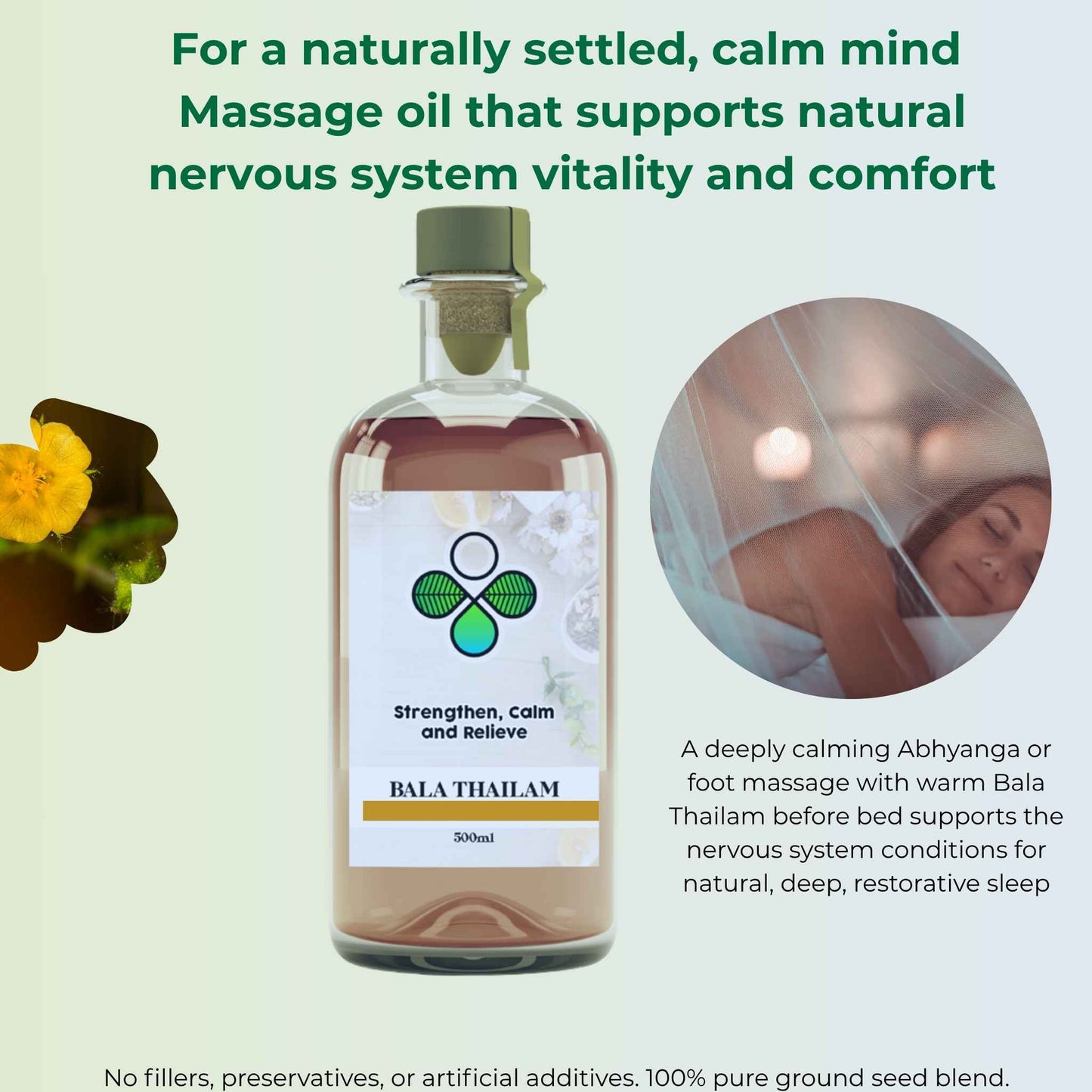
Bala Thailam is a classical, single-herb Ayurvedic oil built on Bala (Sida cordifolia, Country Mallow), prepared in a certified organic Sesame Oil base. Bala is traditionally classified in Ayurveda as a nervine tonic and Rasayana herb, traditionally associated with Vata-type patterns.
In Ayurvedic tradition, Vata is associated with movement, the nervous system, and the sense organs, including the ears. Bala Thailam is traditionally used in three distinct applications: as a full-body Abhyanga (massage) oil, as a Karna Purana (ear oiling) preparation, and, only under direct practitioner guidance, as a Nasya (nasal oil).
Traditional Ayurvedic wellness product. Terms such as "Rasayana" and dosha/dhatu classifications describe traditional Ayurvedic concepts and are not claims of medical or physiological effect. Not intended to diagnose, treat, cure, or prevent any disease.
Benefits
Traditional Vata-Pacifying Massage
• Traditionally classified in Ayurveda as a Vata-pacifying oil, its warm, unctuous nature is traditionally considered opposite to Vata's cold, dry, scattered qualities
• Traditionally used to support a feeling of calm and groundedness through warm oil massage
• Traditionally used as part of an evening routine, including foot massage before bed, as a calming ritual
• Traditionally classified as a nervine tonic in Ayurveda, traditionally associated with a settled, comfortable feeling
Traditional Karna Purana (Ear Oiling) Practice
• Traditionally used in the classical Ayurvedic practice of Karna Purana, warm oil placed in the ear canal as a traditional self-care ritual
• Traditionally associated with a feeling of comfortable moisture in the ear canal, in keeping with Ayurveda's view of Vata's traditionally drying quality
• Traditionally practiced daily during Vata season (autumn and winter) and while travelling, as a grounding self-care ritual
• Important: Do not perform ear oiling if you have a perforated eardrum, an active ear infection, significant earwax blockage, or any ear drainage. Consult a healthcare practitioner if you're unsure whether this practice is appropriate for you.
Traditional Joint & Muscle Comfort
• Traditionally used to support comfortable joint movement through Sesame Oil's naturally lubricating quality
• Traditionally used on the neck, shoulders, and jaw as part of a full Abhyanga massage
• Traditionally classified as supporting Mamsa dhatu (muscle tissue) and Asthi dhatu (bone tissue) in Ayurvedic tissue theory
Traditional Head & Whole-Body Practice
• Traditionally used as a Nasya (nasal oil) only when prescribed by a qualified Ayurvedic practitioner, never self-administered
• Traditionally associated with the Ayurvedic concept of Prana moving through the body's upper channels
• Traditionally used as a whole-body Vata-pacifying Abhyanga oil as part of a daily or seasonal self-care routine
Directions for Use
Full Body Abhyanga (Primary Use)
• Warm the oil: Place the bottle in warm water for 5–10 minutes before use.
• Apply over the whole body: Massage warmed oil generously over the entire body using firm, rhythmic strokes, long strokes on the limbs, circular strokes over the joints, lower back, and abdomen. Pay particular attention to the head, neck, and feet, traditionally considered key Vata seats in the body.
• Allow absorption: Leave the oil on for 10–40 minutes. Rest quietly during this time.
• Rinse with warm water: Shower or bathe in warm (not hot) water afterward.
Karna Purana, Ayurvedic Ear Oiling
• Warm the oil: Warm a small amount of Bala Thailam gently, test on the inner wrist to ensure it's comfortably warm, not hot.
• Lie on your side: With the ear facing upward, use a dropper or small spoon to place 5–10 drops of warm oil into the ear canal.
• Rest and absorb: Remain lying on your side for 5–10 minutes. You may gently massage around the outer ear and base of the skull.
• Repeat on the other side.
• Remove excess: Allow any excess to drain naturally, or gently wipe the outer ear with a soft cotton ball. Never insert anything into the ear canal.
• Frequency: Traditionally practiced daily, particularly during autumn and winter (Vata season) or while travelling.
• Important safety note: Do not use ear oiling if you have a perforated eardrum, an active ear infection, significant earwax blockage, or ear drainage. Consult a healthcare practitioner if you're unsure of its suitability for your situation
Nasya, Nasal Oil Application (Practitioner-Prescribed Only)
• Only under direct practitioner guidance. Nasya has specific protocols and contraindications, and, given this oil's alkaloid content, should not be self-administered under any circumstances.
• General method: Warm the oil by placing the bottle in warm water. Lie comfortably with the head gently tilted back and instill 2–5 drops into each nostril. Sniff gently to draw the oil through the nasal passages without inhaling forcefully. Rest for 5–10 minutes, allowing the oil to coat and nourish the nasal tissues and head channels. As the oil begins to loosen accumulated mucus and impurities, gently bring them forward into the throat, hawk them up, and spit them out rather than swallowing. Finish by rinsing the mouth with warm water to complete the clearing process. This traditional practice supports the natural cleansing and nourishment of the nasal passages and head channels when performed under practitioner guidance.
There is a how to do nasya article on kimmana.com. It's a very old article but still useful: https://www.kimmana.com/blog/nasya-treatment

Key Botanicals
• Bala root (Sida cordifolia / Country Mallow), the primary herb
• Sesame Oil base (Sesamum indicum), certified organic carrier
A two-ingredient classical Ayurvedic oil. No fillers, synthetic fragrances, or artificial additives. For external use only.
Why it works?
Frequently Asked Questions
What is Bala Thailam and what is it used for? +
Bala Thailam is a classical Ayurvedic herbalised oil prepared with Bala (Sida cordifolia), one of Ayurveda's primary strength and nerve-tonic herbs, in a sesame oil base. It is traditionally used for nourishing massage to support natural nerve function, muscle strength, and Vata-related conditions. Bala translates to 'strength' in Sanskrit, reflecting the herb's primary action.
How is Bala Thailam applied? +
Apply warm Bala Thailam with gentle but firm massage strokes along the limbs, spine, and joints. For nerve support, focus on the spine and back of the neck. For muscle support, apply to the limbs and allow to absorb for 30-60 minutes before bathing. It can also be used for scalp massage to support mental clarity and nerve calming.
Can Bala Thailam support recovery from nerve-related discomfort? +
Bala is one of Ayurveda's foremost herbs for Vata-related nerve sensitivity and weakness. Bala Thailam is used in traditional Ayurvedic care for people experiencing nerve sensitivity or weakness associated with Vata imbalance. It is a classical oil used in Panchakarma therapy programs. This product is not a treatment for any neurological disease or medical condition. Seek qualified medical guidance for nerve concerns.
Can Bala Thailam support muscle weakness or wasting? +
Bala Thailam is a traditional Ayurvedic oil for supporting natural muscle tone and deep tissue nourishment, particularly valued for people experiencing muscular weakness or general debility from Vata excess. It is used in classical Ayurvedic protocols alongside dietary and herbal support. This is not a treatment for any neuromuscular or medical condition. Consult your healthcare practitioner for diagnosed conditions.
What is the difference between Bala Thailam and Balashwagandha Thailam? +
Bala Thailam focuses purely on Bala herb, making it the more targeted nerve and muscle tonic oil. Balashwagandha Thailam adds Ashwagandha, extending the formula to include adaptogenic, stress-resilience, and immune-supporting properties. Bala Thailam is preferred for specific nerve and muscle support; Balashwagandha Thailam is preferred for broader vitality and resilience support.
Subscribe to our emails
Be the first to know about new collections and exclusive offers.